
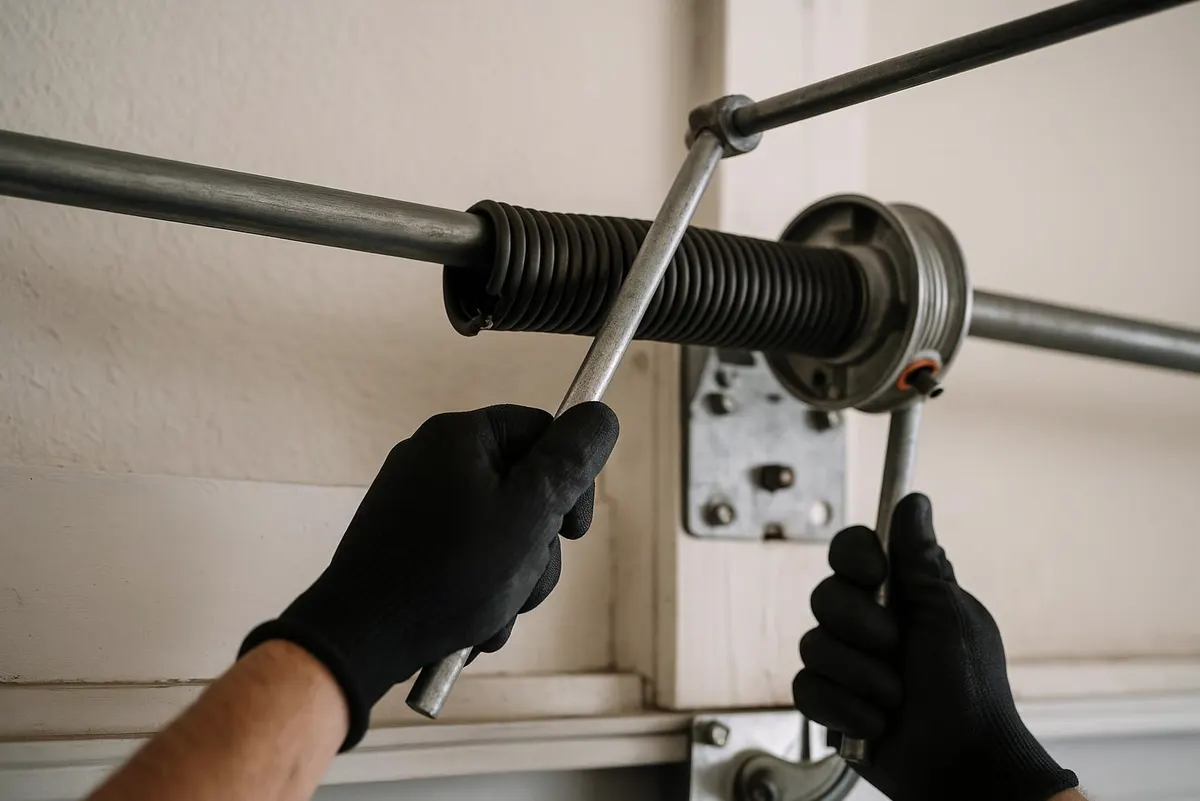
Rule of thumb: if your garage door moves smoothly but looks crooked, the track is usually just out of alignment; if it binds, jerks, or grinds at the same spot every time, something is bent enough to fight the rollers. The exceptions matter, though. A door that looks tilted when it's down can also be a sign of a broken spring or a snapped cable pulling one side lower than the other, not a track problem at all. And a door that reverses on its own mid-cycle is often a safety sensor misreading a shadow or a smudge, not a bent rail. Track issues have their own signature, and knowing it saves you from chasing the wrong fix.
Symptoms That Point to the Track
These are the clues a technician looks for before touching a tool:
- Hesitation or a jerk at the same point on every open and close cycle, rather than random sticking.
- A visible gap between a roller and the track, or a track bracket pulling slightly away from the wall or jamb.
- A door that sits crooked when fully closed, with daylight showing unevenly along the bottom seal.
- Scraping or grinding noise localized to one section of travel, instead of a general rattle.
- The opener straining harder than usual, running hotter or louder as it fights resistance it didn't used to have.
- Rust streaks or flaking near the track brackets, which in this area's humidity often shows up before any visible bend does.
Any one of these alone isn't a verdict. Together, especially the hesitation-plus-gap combination, they're a strong signal the track itself has shifted or deformed.
Causes, Checked in the Order a Technician Would Check Them
1. Loose or Bent Mounting Brackets
This is the first thing checked because it's the most common and the easiest to confirm. Brackets that hold the track to the wall studs or jamb can work loose from years of vibration, or get bent if something leaned against the track. A quick level check against the track reveals whether it's actually bent or just loose and sagging.
The fix: Retightening and realigning is often all it takes. If the wall framing has shifted slightly from humidity-driven swelling, which is common in this climate, the technician shims behind the bracket to bring the track back to true before retightening.
2. Impact Damage
Next comes a visual and hands-on check for dents or kinks, usually near the bottom few feet of track where a vehicle bumper, lawn equipment, ladder, or even a stray basketball made contact.
The fix: Minor bends can sometimes be worked back into shape with a rubber mallet or a track-straightening tool. If the metal is creased or the bend is sharp rather than gradual, that section of track gets replaced outright rather than bent back, since a forced straighten tends to weaken the metal and the problem returns.
3. Worn or Seized Rollers
Rollers that have flat spots, cracked nylon, or dried-out bearings don't travel evenly inside the track. Over months, a seized roller that drags instead of rolling can actually pull the track out of alignment from the inside.
The fix: Replace the worn rollers and lubricate the new ones and the track. This is also the point where nylon rollers are often recommended over steel for quieter, smoother operation in a garage that sees frequent humidity swings.
4. Spring or Cable Imbalance
A door that's out of balance because of a weakening spring or a fraying cable doesn't hang level, and the uneven stress gets transferred to the track and rollers on one side. This shows up as a track that looks fine on inspection but keeps drifting out of alignment again after being straightened.
The fix: Rebalancing the door, which usually means addressing the spring or cable first, before the track is touched again. Straightening a track while the door is unbalanced is a temporary fix at best.
5. Framing or Wall Movement
Wood jambs and framing can swell and shift with seasonal moisture, and that slow movement can tug a properly installed track out of true over a year or more. This is checked last because it's less common but worth ruling out on older installations.
The fix: Re-shimming the track mount, and in some cases relocating a bracket slightly to compensate for a jamb that's no longer perfectly square.
6. Storm-Related Flex
During hurricane-season wind events, a door can flex under pressure even if it never goes off the track entirely. That flex puts a one-time stress load on the track and brackets that can leave them slightly sprung, which then shows up as the symptoms above weeks later.
The fix: A post-storm inspection of brackets, fasteners, and track straightness, tightening or replacing anything that's been stressed before it fails completely.
When to Call Oxford Garage Door Experts
If your door is hesitating at the same spot, grinding, or sitting crooked, it's worth having it looked at before the rollers or opener take on extra wear from fighting a bad track. Oxford Garage Door Experts handles off-track door repair and garage door maintenance & tune-up visits that catch bent brackets and worn rollers before they turn into a stuck door on a Saturday morning. If the misalignment turns out to be tied to a weak spring or frayed cable, we handle garage door spring repair and cable repair on the same visit so the door goes back into balance, not just back on track.
If your garage door in Oxford, FL is sticking, grinding, or hanging crooked, call Oxford Garage Door Experts for a same-day inspection before it fully jumps the track.