
The One-Sentence Rule (and the Exceptions)
Most garage door noise is fixable with a wrench, the right lubricant, and an hour on a weekend morning — but a sudden grinding, banging, or popping sound usually means something is actually failing, not just squeaking.
Watch for these exceptions before you start tightening bolts:
- Metal-on-metal grinding or a loud bang mid-cycle often points to a torsion spring problem. Springs are under extreme tension — this is a call-a-technician situation, not a Saturday project.
- A sharp pop or snap followed by the door stuttering usually means a fraying cable. Keep people and cars clear and call for help.
- A groan that only shows up on humid afternoons is often swollen wood jambs or a track that's shifted slightly out of alignment — worth a professional look before you lubricate your way past the real issue.
Tools You'll Need
- Ratchet and socket set (plus an adjustable wrench)
- Garage-door-specific lithium or silicone-based lubricant (not WD-40 — it attracts dust and grit in humid air)
- Clean rags
- Sturdy step ladder
- Flashlight
- Optional: replacement nylon rollers, rubber motor-isolation kit
Step-by-Step: From Cheap Fixes to a Full Swap
- Tighten every bolt and screw. Daily cycling and wind load during storm season gradually loosen hardware on tracks, hinges, and brackets. Go panel by panel with a ratchet. This alone resolves a surprising amount of rattling.
- Lubricate the moving parts correctly. Apply garage-door lubricant to hinges, roller stems, and the top of the track — never a thick coat, just enough to stop metal-on-metal contact. A light touch on the spring coils helps too, but don't touch spring tension itself.
- Replace worn rollers. Steel rollers without bearings are one of the most common noise sources, especially after a few humid Florida summers. Swapping them for nylon rollers is a straightforward DIY job — pull one roller at a time so the door stays supported. If a roller comes out bent, or the track itself looks worn or rusted, stop there and call a technician.
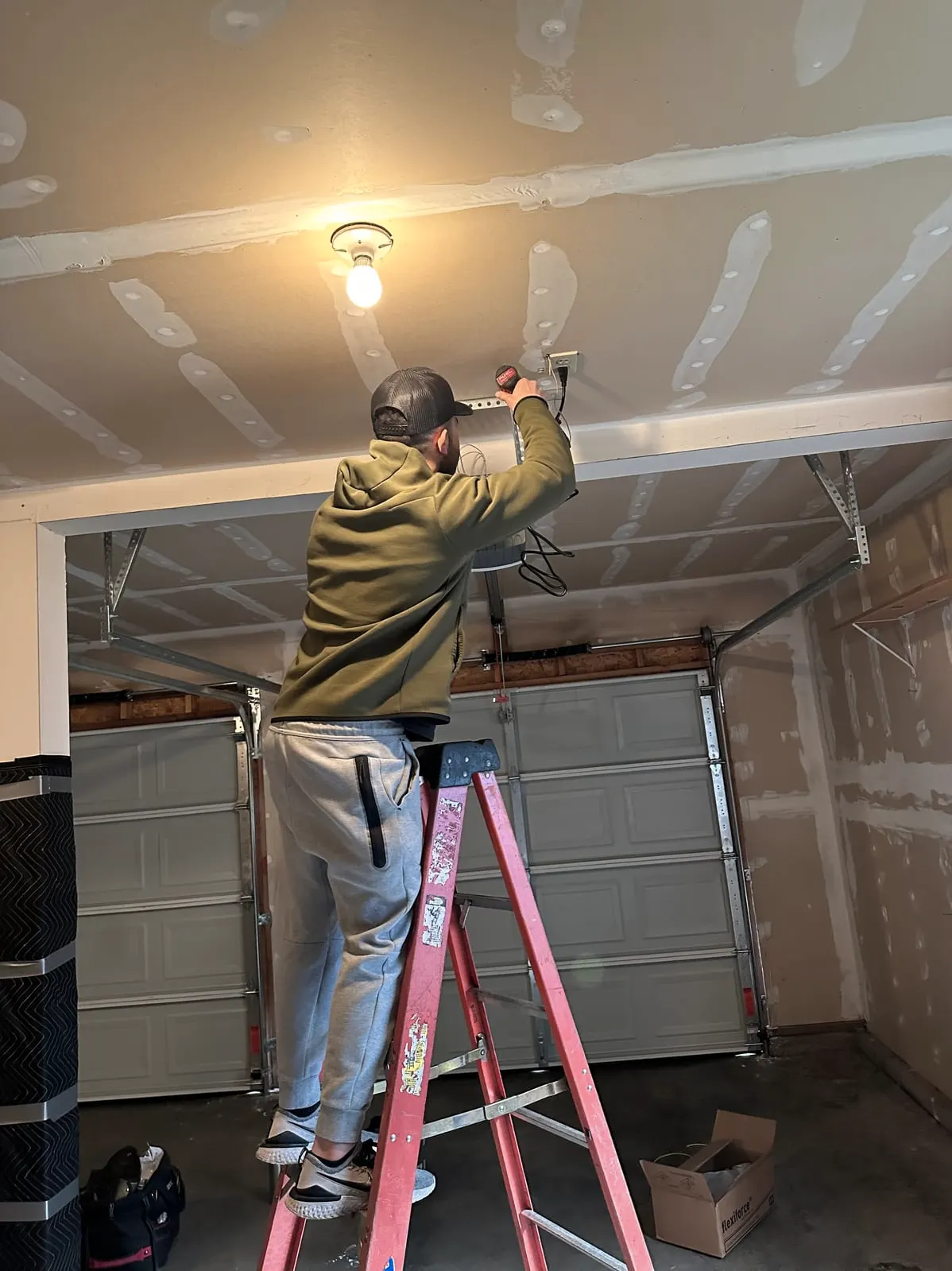
- Isolate the opener motor. Add rubber isolation washers between the motor unit and its ceiling mounting bracket. This stops vibration from transferring into the attic and amplifying through the house — a cheap fix that makes a noticeable difference.
- Check chain tension. A chain-drive opener that's too loose will slap against the rail; too tight, and it strains the motor. Your owner's manual will show the correct sag measurement. If you've adjusted it properly and the noise persists, the sprocket or chain itself may be worn out — that's a repair, not an adjustment.
- Consider a belt-drive swap. If you've done all of the above and the opener is still loud, the permanent fix is replacing a chain-drive unit with a belt-drive opener. Belt drives run dramatically quieter and hold up well in humid, salt-air conditions. This involves disconnecting the old motor, rewiring the new unit, and recalibrating travel limits and force settings — worth having a technician handle it so the door balances correctly afterward.
What a Technician Checks That You Can't From the Ground
Spring tension, cable wear, and track alignment all affect how hard the opener has to work — and a noisy opener is sometimes just the symptom of one of those problems, not the cause. A tune-up visit typically includes a balance test (disconnecting the opener and checking if the door holds position halfway open), a check for rust on hinges and track bolts, and a look at cable fraying near the bottom brackets, all of which are harder to judge safely without the right tools.
Why Humidity and Storm Season Make This Worse Here
Afternoon downpours and the swings between muggy and dry air cause hardware to rust faster than it would in a drier climate — rusted hinges and rollers squeal long before they fail outright. Wood door jambs can swell slightly during the wettest stretches of the year, which binds the door against the track and makes the opener strain and groan even if the hardware itself is fine. And if your door carries wind-load-rated reinforcement for hurricane season, it's simply heavier — more mass means more wear on rollers, hinges, and the opener's drive system over time, which is exactly where noise tends to show up first.
When to Call Oxford Garage Door Experts
If you've tightened, lubricated, and swapped rollers and the door is still loud — or if you noticed grinding, a bent track, or a frayed cable along the way — it's time to bring in a technician. Oxford Garage Door Experts can run a full Garage Door Maintenance & Tune-Up to check spring balance, track alignment, and hardware condition before anything fails, or handle a Garage Door Opener Installation if a belt-drive swap is the right long-term fix for your setup.
Give us a call for same day garage door service in Oxford, FL and the surrounding Sumter County area — we'll find the actual source of the noise and fix it right the first time.